From April 2 to 25, 25 spectacular concerts will fill the NCPA and Beijing Performing Arts Centre, featuring 13 world-class conductors, 27 orchestras from China and abroad, and more than 80 master performers.
Under the theme "harmony of myriad sounds", the festival is set to bring a dazzling showcase of traditional Chinese music, blending centuries-old artistry with contemporary creativity.
Since its inception in 2022, the "Spring of Chinese Music" festival has become a leading platform for presenting and exchanging Chinese music, says Wang Wei, head of the NCPA's performance department, in Beijing on March 18.
"This year's festival is designed not only to promote the inheritance and innovation of Chinese music but also to encourage academic exchange and cross-disciplinary collaboration," says Wang.
The festival gathers some of the finest ensembles in China and from abroad. The China National Traditional Orchestra jointly stages a concert with the Russian Osipov State Academic Folk Orchestra to open the festival on April 2. Chinese conductor Li Xincao and Russian conductor Vladimir Andropov lead the two orchestras featuring pieces from both countries.
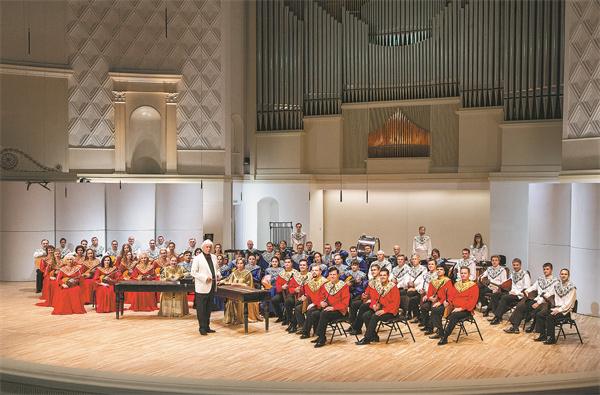
Russian Osipov State Academic Folk Orchestra opens the festival along with China National Traditional Orchestra on April 2. CHINA DAILY
During the festival, orchestras from Beijing, Jiangsu, Shandong provinces, and beyond will perform works that celebrate regional styles, reinterpret classical works, and explore new dialogues between traditional Chinese music and symphonic forms.
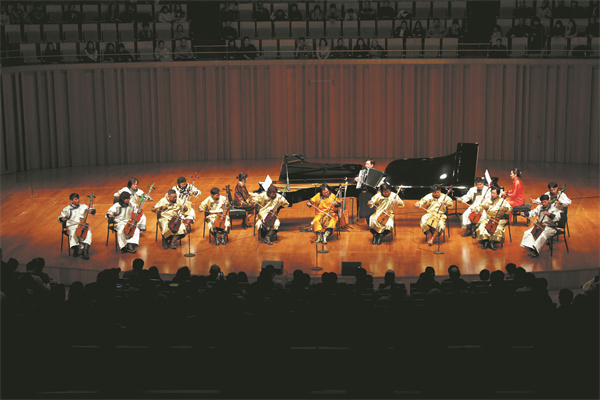
The closing concert shifts the spotlight to the Huqin family of bowed string instruments. Over 40 virtuosos will perform the Erhu (a two-stringed fiddle), Banhu (a bowed string instrument), and the Morin Khuur, or Horse-headed Fiddle, delivering an exhilarating artistic showcase.
The festival will unveil its first-ever "Intangible Cultural Heritage Music Week", bringing six immersive concerts that breathe new life into China's centuries-old musical traditions. Far from static museum pieces, these performances transform ancient heritage into vibrant, living art for contemporary audiences.
Audiences will encounter a dazzling range of instruments and styles — from the serene tones of the Guqin (a seven-stringed Chinese zither) and the haunting melodies of the Morin Khuur to the festive sounds of the Sheng (a free-reed wind instrument). Traditional folk songs, regional opera, and local performance arts from Yunnan province's mountain songs, Suzhou, Jiangsu province's Pingtan (a traditional form of storytelling and ballad singing), and Jiangzhou, Shanxi province's drum music, create a rich tapestry showcasing the diversity and vitality of Chinese intangible cultural heritage.
By blending innovation with tradition,"Intangible Cultural Heritage Music Week" invites audiences to witness how ancient music can resonate with contemporary life, celebrating the creativity, passion and dedication of the artists who keep China's musical heritage alive and evolving.
Morin Khuur master Chi Bulag, 83, will lead his band, Wild Horse, to perform during the festival.
"I've played this instrument my whole life through joy and hardship. It is the rhythm of the people, the pulse of the steppe, and the wildness of the horses running freely. At my age, I play not only for myself but for the generations to come, so they too can hear the spirit of the Mongolian ethnic group in every note," he said in Beijing on March 18.
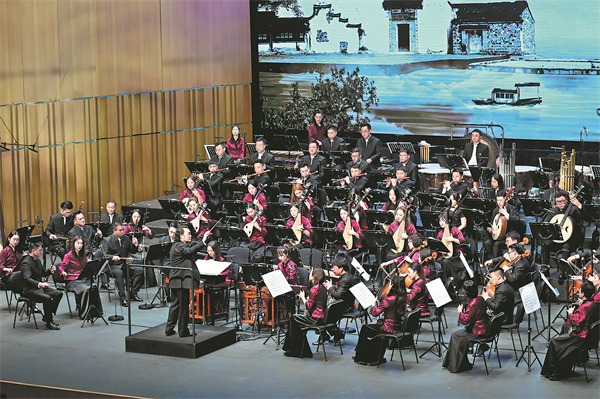
Macao Chinese Orchestra will make its debut at the festival. CHINA DAILY
He performed at the opening ceremony of the 2008 Beijing Olympics and made an international impact by performing in Japan and the United States. He is credited with training new Morin Khuur players, popularizing the instrument, and expanding its tonal range.
"When I stand on stage with my band Wild Horse, I am reminded that music is not just for the past. The band members are young and from around the country who keep the old sound alive, and it moves forward with the people that hear it," he noted.
Meanwhile, the Macao Chinese Orchestra will make its debut during the festival, presenting works that reflect Macao's unique history and culture and reinforcing the festival's role in fostering regional and international exchange, according to Wang.
The Central Conservatory of Music's Chinese orchestra and the Zhejiang Conservatory of Music's Guzheng (Chinese zither) ensemble are also set to dazzle audiences.
Founded over a decade ago, the Zhejiang Conservatory of Music's Guzheng ensemble has long focused on original compositions and experimental performances. Their project, Jade, a bold cross-disciplinary creation, will be staged in Beijing.
Premiered in December 2023, Jade blends the Guzheng with a full Chinese orchestra, integrating dance, calligraphy and multimedia stage design. The production unfolds across seven movements, each linked with storytelling that connects music, visuals and narrative into a seamless whole.
"The work reflects the ensemble's ongoing exploration of how traditional instruments can engage contemporary audiences while maintaining their cultural essence," says Zhou Zhan, artistic director of the Zhejiang Conservatory of Music's Guzheng ensemble and a professor at the school.